Online Undergraduate Course
Nurs460 – HEALTH INFORMATICS FOR REGISTERED NURSES
Module 10: Technology to Support Public Health
Overview of Public Health and Public Health Informatics
WHAT IS PUBLIC HEALTH?
Public health is the science, art, and practice of protecting and improving the health of populations (Nelson & Staggers, 2014). Public health focuses on promoting the health of communities and populations and contributes to the improvements in health status throughout the world. For example life expectancy in 1900’s was around 47.3 years but in 2000 it has increased to 76.8 years. That’s an increase of 62%. Although there are many factors that contribute to this change such as antibiotics, advances in medicine, and new treatment options, public health initiatives account for the greatest impact.
WHAT ARE THE MAIN FUNCTIONS OF PUBLIC HEALTH?
- Prevent spread of disease and epidemics
- Protect the environment against hazards
- Promote measures to avoid injuries
- Encourage healthy behaviors
- Provide disaster response and recovery
- Assure the quality and accessibility of health services
Most functions are invisible to the general public because the goal is to prevent hazardous situations from occurring but there are important activities that occur that are less visible (see Figure 1).
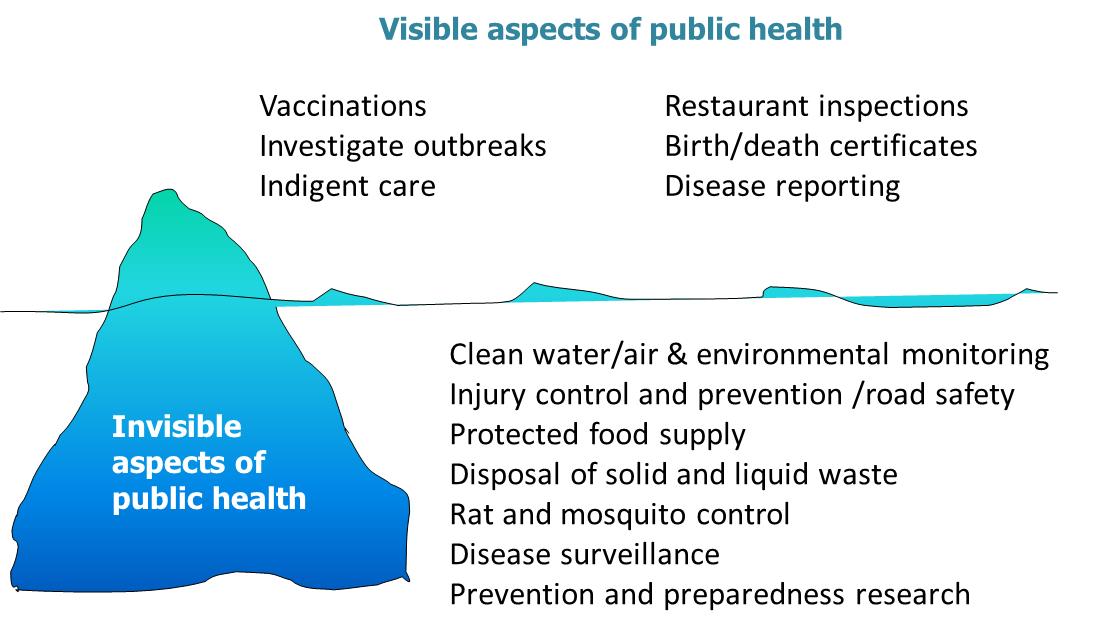
Figure 1: Visible and Invisible Aspects of Public Health
WHAT IS PUBLIC HEALTH INFORMATICS
According to Nelson & Staggers (2015) public health informatics (PHI) is “The application of informatics in areas of public health, including disease or condition surveillance, reporting, and health promotion”. Wilson (2012) and Alexander, Frith & Hoy (2014) concur that PHI is used to solve problems and support the goals of public health. PHI incorporates concepts from a variety of disciplines as shown in Figure 2.
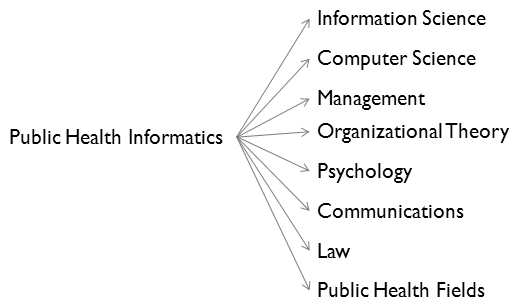
Figure 2: Public Health Informatics Interdisciplinary Concepts
This website is maintained by the University of Maryland School of Nursing (UMSON) Office of Learning Technologies. The UMSON logo and all other contents of this website are the sole property of UMSON and may not be used for any purpose without prior written consent. Links to other websites do not constitute or imply an endorsement of those sites, their content, or their products and services. Please send comments, corrections, and link improvements to nrsonline@umaryland.edu.